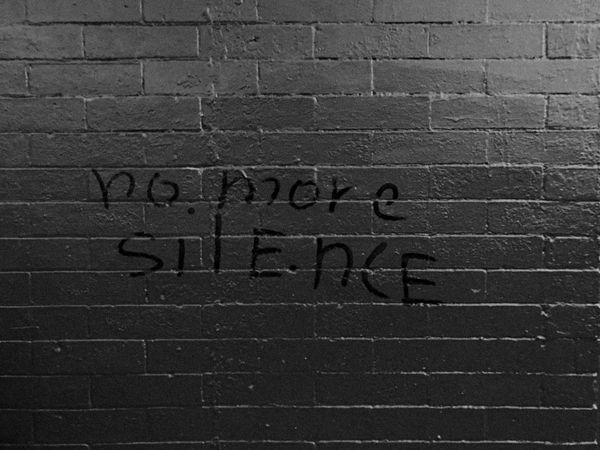
Subtraction
The art isn't in adding. It's in revealing what's already there by taking away what isn't.


A sonnet has fourteen lines. Ten syllables per line. A fixed rhyme scheme. By every logic of freedom and expression, it should be the most constrained, least creative form of writing possible.
And yet.
Some of the most powerful words in the English language were written inside that cage. The constraint didn't limit the creativity. It was the source of it.
I've been thinking about limitation differently lately. As a CTO for two contemporary fashion brands, I live in a world that treats constraints as problems to solve. Not enough budget. Not enough time. Not enough people. The instinct is always to remove the constraint - add resources, extend deadlines, hire more. Addition feels like progress. Subtraction feels like loss.
But some of the best work I've done has come from the tightest constraints. When we couldn't add, we had to think. When we couldn't build more, we had to build better.
The Addition Reflex
In Dare, I wrote about how almost everything in modern commerce has become a commodity - brand, product, technology, logistics, data. All table stakes. When everything levels out, the instinct is to add more. Optimize harder. Measure more. Automate faster. It's the same finite-game thinking I've been circling since Moloch - the race where everyone adds speed because no one dares to change direction.
But what if the answer isn't adding? What if it's removing?
I came across a story about Rick Rubin, the legendary music producer. He can't play a single instrument. He can't read music. He doesn't work a soundboard. When asked what he's actually paid for, he said: the confidence he has in his own taste, and his ability to say what he feels.
What he does in a studio is almost nothing you could put a label on. He listens. He lies on the floor, barefoot, eyes closed, and listens. And then, mostly, he removes things he doesn't like. His value to music is never addition. It's subtraction. He strips everything away until only the true essence remains - the artist, more themselves than they've ever been.
That stopped me. Because I've been doing the opposite my entire career.
What You Remove
I am a builder by nature. Give me a problem, and I will map it, measure it, and build a system around it. I add tools. I add processes. I add metrics. And for years I thought this was leadership - constructing something, layer by layer, until the machine runs.
But the leaders who shaped me did something harder. They subtracted. They removed obstacles. They cut meetings that wasted time. They killed projects that no longer served the purpose. They stepped back so someone else could step forward.
In Empower, I wrote that empowerment is an environment you build, not a baton you hand off. I'm starting to think the environment is built by what you remove, not what you add. The leader's real work is subtraction - clearing the noise, cutting what doesn't serve the purpose - so the team can move.
Michelangelo supposedly said the sculpture was already inside the marble, and his job was simply to remove what wasn't the figure. Whether he said it or not, the idea holds. The art isn't in adding. It's in revealing what's already there by taking away what isn't.
The Invisible
Here's the uncomfortable part. Invisibility goes against everything we're told about leadership today. Be visible. Be present. Be constant. Narrate the work while doing the work. Post, share, broadcast. Somewhere along the way, visibility stopped being a by-product of good work and became the work itself.
I feel this pressure myself. As a CTO, there's an expectation to be everywhere - in every channel, every decision, every meeting. The dashboard is always there, pulling you toward the measurable. And the performance of leadership - being seen leading - starts to matter more than the leading.
But the leaders I trust most are the ones I rarely see performing. They show up in the work, not around it. Their influence is structural, not theatrical. You feel it in the clarity of what's been removed, not the volume of what's been added.
In Listen, I wrote about the smartest leader I ever worked with - the one who said the least. Not because he had nothing to say, but because he understood that you can't hear the signal if you're always broadcasting. Subtraction of voice. Subtraction of ego. The creative power of being invisible.
The Source
This is the paradox I keep returning to: limitation is not the enemy of creativity. It's the source of it.
The blank page is paralysis. The bounded page is a poem. A sonnet has fourteen lines, and the constraint is what makes it sing. A sculpture begins with a single block of stone and the discipline of removing everything that isn't the figure. A great edit is not what you write - it's what you cut.
In business, we resist this. We want more - more budget, more headcount, more tools, more data. We treat limitation as a temporary condition to be solved, not a condition to be embraced. But the teams I've seen do their most creative work were the ones operating under constraints that forced them to choose. To prioritize. To subtract everything that wasn't essential and pour everything into what remained.
This is also true for brands. The instinct is always to add - more channels, more campaigns, more touchpoints, more content. Optimize the ads. Sharpen the copy. Be seen and heard everywhere. Cut through the noise by adding more noise. You optimize the measurable, just like every other brand, and wonder why you feel like every other brand.
But what if the strongest brand move is subtraction? What if true branding lies in being invisible - in removing everything that isn't the experience, until what remains is so clear your customers feel it without being told? As I wrote in Dare, the one thing you can't commoditize is how you make people feel. You make them feel that way not by adding to the noise, but by subtracting from it, so that the focus remains on them.
The leaders who impose the fewest metrics but the clearest values create the most space for the unmeasurable to grow. They don't add dashboards. They subtract noise. They understand, as I wrote in Trust, that the one thing that holds a team together is the number that never shows up in a board deck.
Limitation isn't what's in the way. It's what makes the way.
The AI Tension
And this is where AI sharpens the edge. AI is the ultimate addition machine. It can generate content, optimize campaigns, predict churn, personalize recommendations. It can produce more, faster, in any style you can name. What it can't do is subtract with judgment.
It can't look at a project and say, "This doesn't need to exist." It can't listen to a team and hear what's unsaid. It can't walk into a room and remove the tension by simply being present. It can add. It cannot take away.
This is the human work that remains when everything else is automated: not the generating, but the choosing. Deciding what is worth making and what to cut. What to keep and what to let go. AI will always be able to produce more. It will never be able to decide what doesn't belong.
And that's why subtraction is the last human skill AI can't touch. Not because it's complex - it's simpler than generating. But because it requires someone to care enough to say no. To look at the work and remove what doesn't belong, not because a metric told them to, but because they felt it. AI will always give you more. A leader who subtracts gives you less, and it turns out less is what you needed all along.
The Subtraction
The subtraction is choosing to do less, better. It's deciding that the invisible work - the trust you build, the noise you remove, the people you make room for - is worth more than the visible output that fills a feed and resets to zero the moment you stop.
Dare to subtract. Dare to be invisible. Dare to let limitation be the source.
The rest is just addition.
In my next post, I'll write more about invisibility.