Backwater
A leader operating with a finite mindset sees a crisis as a pass-or-fail event. An infinite-minded leader sees it differently. A crisis isn't a test to survive. It's a moment that reveals what the organization is truly made of.


There's a term in river navigation for a stretch of water where the current stalls. Cut off from the main flow, it looks calm on the surface. Peaceful, even. But nothing moves forward. The water just sits there, disconnected from the force that's supposed to carry everything downstream.
I've seen entire leadership teams drift into that backwater. I have been there too.
It usually starts the same way. A crisis hits - a major global event, a strategic shift, a failed launch, a quarter that exposes cracks nobody wanted to talk about - and the leaders who should be stepping forward start stepping sideways. They don't disappear physically. They're still in every meeting, still answering every message. But they stop leading. They hide in the doing - all things that feel controllable when the bigger picture does not.
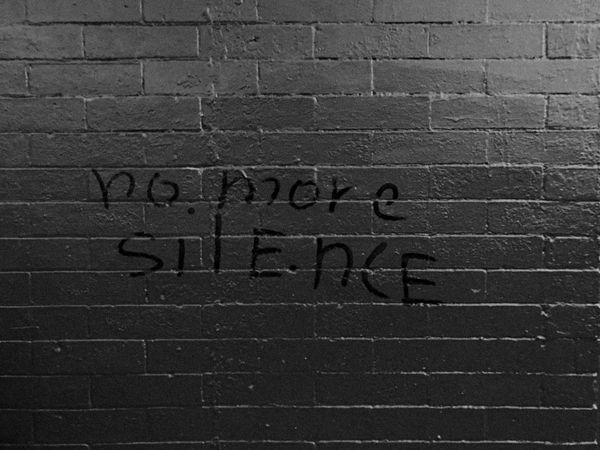
The silence that follows is unmistakable.
The Invisible Leader
Being a leader, I've watched this play out across companies, teams, and leadership levels. A pandemic hits. A platform migration breaks. A market launch stalls. A new direction stretches every team thin. And in those moments, the instinct to retreat into the work itself, to stop communicating and making decisions, to become the fixer instead of the focal point, is almost universal.
But leadership in a crisis must be central. Not hidden behind departments. Not buried in operational details, or AI-generated answers. Central. It's a human topic.
Hiding is like a slow resignation - you give up not just on the infinite game, but even on the finite one. When a leader goes quiet during a crisis, the team notices. And what they notice isn't calm - it's absence. The space where direction and reassurance should be is suddenly empty.
”Hiding is like a slow resignation - you give up not just on the infinite game, but even on the finite one."
In Change, I wrote about the silence of people nodding along without buying in during a transformation. But there's another kind of silence, and it's worse: the silence that comes from the leaders themselves. When the person holding the bigger picture stops showing up with clarity and conviction, people don't wait patiently. They start making their own assumptions. They hedge. They protect themselves. And eventually, at the first real opportunity, they leave.
Contrast that with the kind of leader I described in Beyond - someone who could walk into a tense room and, within minutes, make everyone feel heard. That kind of social intelligence isn't a skill reserved for good days. It's most powerful precisely when things are falling apart. It's the difference between a team that holds together and one that quietly fractures.
The Compounding Effect
When a leader hides, two things compound. The crisis itself doesn't resolve - it festers. And the cultural debt accumulates.
I've touched upon Enterprise Debt in other posts - not just the technical kind, but the organizational and cultural layers that are far harder to see and even harder to unwind. When leadership disappears under pressure, a new norm emerges. People learn that this is how things work here: when it gets hard, you're on your own. That norm becomes self-reinforcing, exactly the kind of ingrained behavioral pattern, normally described as cultural debt, justified by "this is how we've always done it."
“When leadership disappears under pressure, a new norm emerges. People learn that this is how things work here: when it gets hard, you're on your own.”
Now add significant upheaval on top of that, and the backwater becomes obvious. You're asking people to find their footing on unfamiliar ground while simultaneously weathering a crisis without visible leadership. You're not just losing momentum - you're making the slope slippery. The organization slides backward before the new chapter even begins. And this is where individual rationality becomes collective failure.
This is the Moloch Trap - a concept of collective sacrifice for short-term gain - in its purest form. Sacrificing the long-term health of the organization - trust, culture, momentum - for the short-term comfort of avoiding difficult conversations. Everyone acts in what feels like their own best interest (keeping their head down, staying safe), and the collective result is that everyone ends up worse off. I will dive deeper into the Moloch Trap in a coming post.
Stepping Into the Current
This is the finite mindset at work. A leader operating with a finite mindset sees a crisis as a pass-or-fail event. In that framing, hiding feels rational - if I don't make the wrong move, maybe I won't lose. But that thinking leads to paralysis, an organization stuck and unable to make long-term decisions.
An infinite-minded leader sees it differently. A crisis isn't a test to survive. It's a moment that reveals what the organization is truly made of. And as Maxwell writes in Lead Like a Guide, the guide doesn't retreat to the tent when the weather turns. The guide steps forward, adjusts the route, and communicates clearly.
The point isn't having all the answers. It's being present. Being the focal point, not the fixer. The leader's job isn't to solve every problem - it's to be visible, available, and honest about what is known and what is not.
It means acknowledging the uncertainty rather than pretending it doesn't exist. A finite mindset avoids naming what's hard because it feels like admitting failure. An infinite mindset says: here's where we are, here's what we don't yet know, and here's how we'll move forward together. It's about looking out for those in your charge.
And even in crisis, it means protecting the creative spark. As I wrote in Dots, the mind needs space to wander and connect ideas. A crisis-mode leader who fills every minute with firefighting also extinguishes the thinking that might actually lead to the real solution.
Leaving the Backwater
The damage an invisible leader causes is rarely dramatic. There's no single catastrophic moment. It's quieter than that. A slow erosion of trust. A team that becomes more cautious, more guarded, more focused on self-preservation than shared purpose. I've lived through it, and the pattern is always the same.
But I've also seen what happens when a leader steps back into the current - imperfect, uncertain, but present. It shifts something immediately. Not because the answers suddenly appear, but because the team can see that someone is willing to stand in the uncertainty with them. That's the kind of leader I strive to be.
Hiding doesn't make the crisis go away. But it can make your people go away. And that's a loss no reorganization can fix.